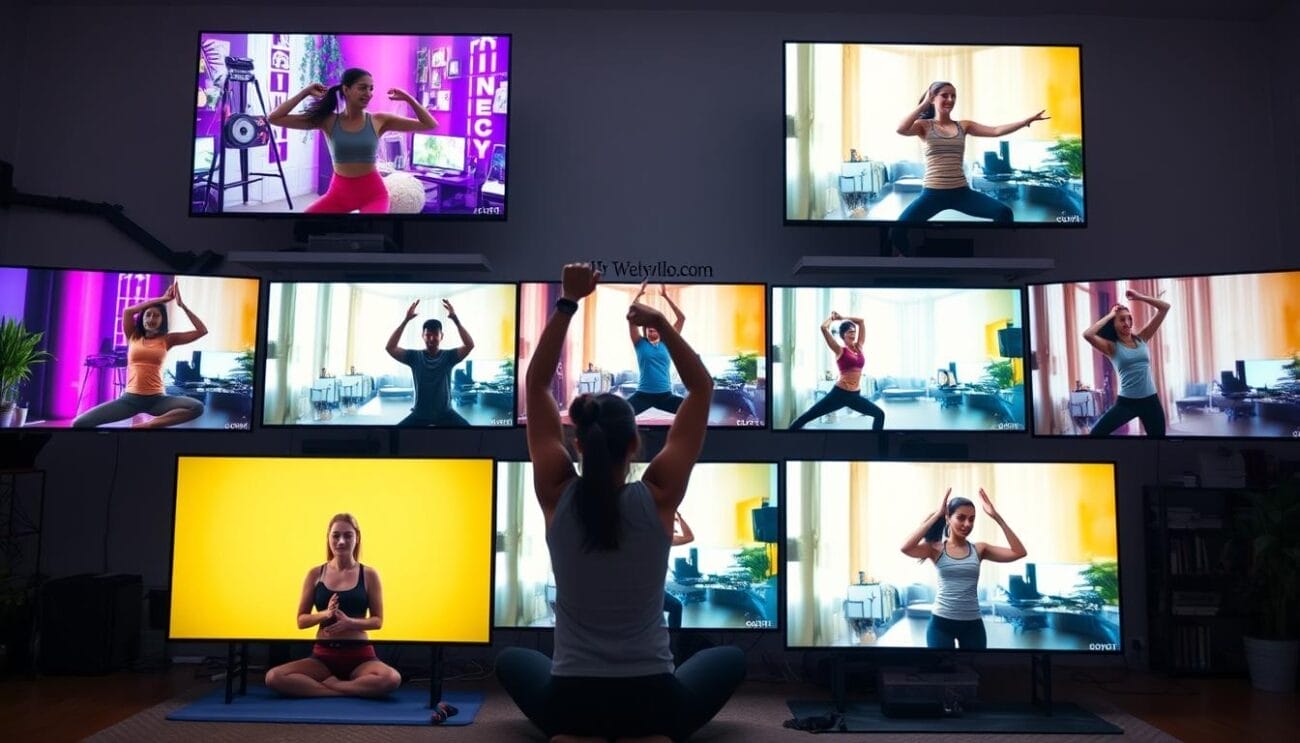
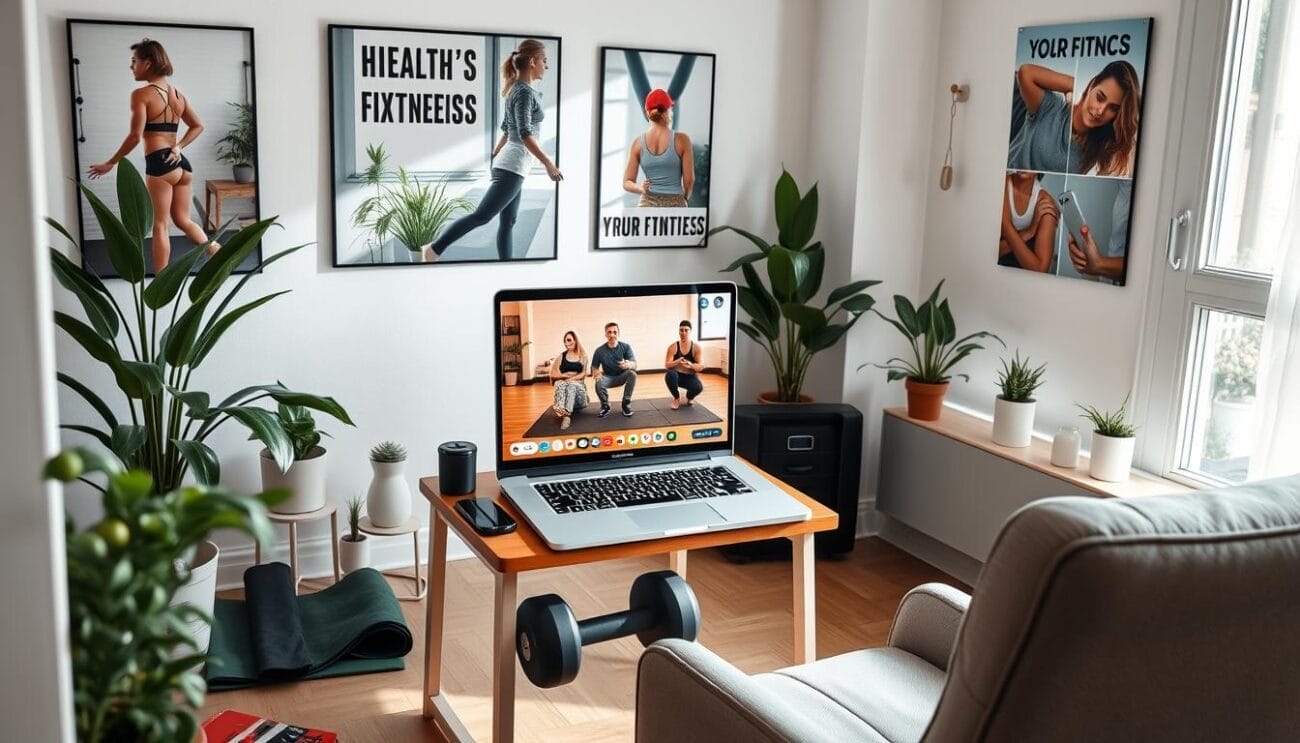
Did you know that many people who add just 30 minutes of guided movement three times a week report dramatic boosts in mood and energy within a month?
You’re here to find options that fit your life, save time, and help your body feel strong and steady. Fit n Fab curates trusted platforms and access to live and replay workouts so you can match formats to your goals.
From strength and cardio to yoga and stability sessions, you’ll see clear choices like SilverSneakers Circuit, Cardio Dance, Total Body Strength, and gentle Yoga Flow. Each class type lists length, intensity, and equipment needs so picking the right class is simple.
Ready to build a balanced routine? We pair practical weekly plans with Fit n Fab Shop essentials—supplements, herbal support, and recovery tools—to keep you consistent and thriving without guesswork.
Key Takeaways
- Discover live and replay access to varied workouts for every level.
- Match class formats to space, schedule, and goals with clear guidance.
- Find instructor quality, music vibe, and equipment needs at a glance.
- Use Fit n Fab Shop picks to support recovery and overall wellness.
- Simple progressions and modifications make sessions welcoming and effective.
Why online group fitness classes are the easiest way to feel balanced right now
Simple, ready-to-play sessions make it easy to prioritize movement even on your busiest days. You save commute time and skip the waitlists so a short workout fits naturally into your routine.
Curated platforms narrow the choices so you pick the right option fast. Filters for length, intensity, and equipment remove guesswork and reduce friction.
Small spaces don’t limit results. You control volume, light, and temperature for the comfort that helps you show up consistently.
- You can stack short workouts—mobility, core, quick burn—to match your energy and available time.
- Live cues and chat bring accountability so you feel like others are rooting for you in real time.
- On-demand replays let you repeat favorites and lock in form until movements become second nature.
- Modifications and progressions keep every session accessible and challenge you as you improve.
Prioritize recovery. Layer sleep support, bath soaks, and stress-soothing herbs from Fit n Fab Shop so healthy routines actually stick.
For research-backed programming and practical tips, check our short guide to evidence-based programming: evidence-based programming.
Top platforms to try today: live and on‑demand workouts that fit your schedule
Explore platforms that give you the right mix of scheduled sessions and replay libraries. You can choose high-energy live options or on-demand videos to match busy days.
SilverSneakers LIVE: strength, cardio, and stability options you can do at home
SilverSneakers LIVE offers a clear schedule with strength training, Cardio Mix, Cardio Dance, Total Body Strength, and Bodyweight Bootcamp (all 45 minutes). Mind‑body options include Yoga Flow, BOOM Mind, Enerchi, and Stability sessions with levels noted so you can view what fits your day.
The Strategist’s favorites: tried-and-true programs editors actually sweat through
The Strategist lists editor-tested picks like Ballet Beautiful, be.come Project, The Class by Taryn Toomey, Kayla Itsines BBG, and Melissa Wood Health. These programs vary by length, price, and trial membership so you can test routines before committing.
Virtual Group Fitness Studio: 35+ new live classes weekly and 7000+ on-demand
Virtual Group Fitness Studio drops 35+ live sessions each week and stores 7,000+ workouts that never expire. If music drives you, the studio and The Sculpt Society offer upbeat playlists to help you sweat and repeat favorite videos over years.
| Platform | Live offerings | On‑demand library | Best for |
|---|---|---|---|
| SilverSneakers LIVE | Scheduled strength, cardio, stability | Replays of workshops & sessions | Clear levels and rehab-friendly work |
| The Strategist picks | Varies by program (live & recorded) | Short videos to full workouts | Editor-tested, varied formats |
| Virtual Group Fitness Studio | 35+ new live sessions weekly | 7,000+ permanent workouts | Music-driven, broad variety |
Pro tip: Check membership details, trials, and pricing. Save favorites and repeat routines, and browse Fit n Fab Shop essentials for recovery and support at Fit n Fab Shop essentials.
Strength & cardio picks that work every muscle group
Choose workouts that hit every major muscle while fitting neatly into busy days. These selections pair resistance work and cardio so you build power, stamina, and balance without endless hours.
SilverSneakers Circuit, Total Body Strength, and Bodyweight Bootcamp
SilverSneakers Circuit (45–60 min) alternates upper-body strength with low-impact cardio. A chair and handheld weights or tubing make many exercises safer and more effective.
Total Body Strength (45 min) focuses on functional strength to build power and endurance. Bodyweight Bootcamp (45 min) uses energizing circuits to boost strength and cardiovascular fitness; a mat helps for floor work.
Kayla Itsines BBG: 28‑minute HIIT blocks for efficient full‑body training
BBG structures 28-minute HIIT into four seven-minute sections. Minimal equipment is needed, and you typically train three days per week with walking or jogging on off days. This format keeps intensity high while targeting all muscle groups.
Nike Training Club collections for small spaces and progressive strength
Nike Training Club offers free plans like “Done in Under 20” and “Big Workouts for Small Spaces.” You can choose progressive paths for strength, mobility, or endurance that scale as you improve.
- Build total-body strength by starting with Circuit, then level up to Total Body Strength using manageable weights and solid form.
- Use Bodyweight Bootcamp for heart-rate spikes without extra equipment; a mat protects joints during floor moves.
- Follow BBG for predictable HIIT segments that target all major muscles in a short time.
- Try Nike Training Club to progress week to week, even in small spaces.
- Tip: Use clear videos and timers to view proper form and track progress safely.
Yoga, Pilates, and barre to build core strength and flexibility
Mixing barre, pilates, and yoga gives you targeted toning plus steady gains in flexibility. These low‑impact approaches focus on alignment, breath, and controlled movement so your core and joints feel safer and stronger.
SilverSneakers Yoga (45–60 min) uses seated and standing poses and a chair when needed, making it ideal for mobility and balance. Move into Yoga Flow (45 min) for more floorwork and longer holds.
BOOM Mind blends yoga, pilates, and barre in 30–45 minute sessions to target core and glutes while keeping you centered. Melissa Wood Health offers calm, 18–45 minute pilates‑yoga flows and short meditations you can use every day.
The be.come Project posts one new 25‑minute routine weekly with clear modifications and tutorials. Ballet Beautiful and LEKFIT Define provide short, focused videos for mat work, posture, and low‑impact toning.
- Choose SilverSneakers Yoga for supportive options, then try Yoga Flow when you want more challenge.
- Use short videos from Melissa Wood Health or Ballet Beautiful on busy days to keep momentum.
- Keep a mat and a chair or blocks handy to protect knees and maintain alignment.
| Program | Length | Best for |
|---|---|---|
| SilverSneakers Yoga / Yoga Flow | 45–60 min | Mobility, balance, progressive floorwork |
| BOOM Mind | 30–45 min | Core, barre blend, mindful toning |
| Melissa Wood Health | 18–45 min | Daily pilates‑yoga flows, calm pacing |
| be.come Project | 25 min (weekly) | Skill building with detailed modifications |
| Ballet Beautiful / LEKFIT Define | 4–20 min | Targeted mat toning and low‑impact strength |
View these routines as complements to strength days. Over time your posture and range of motion will improve, and everyday movements will feel easier.
Dance and hybrid classes that make every workout feel like play
Choose sessions that pair music and movement to make cardio feel less like work and more like fun. These picks blend choreography, strength, and tempo so your workouts fly by.
Cardio Dance and Cardio Mix
Cardio Mix (45 min, intermediate) uses low-impact progressions to build aerobic capacity. Start here if you want gentle steps that scale up.
Cardio Dance (45 min, intermediate–advanced) blends ballroom and Latin moves so the time feels like a social set while you sweat.
The Sculpt Society & Housework
The Sculpt Society pairs pop-timed dance cardio with sculpt blocks on the mat. Many routines run 10–60 minutes and include a 14-day trial.
Housework by Sydney Miller is a 45-minute live Zoom that mixes Pilates, sliders, light weights, and house beats for $13 per session.
The Class by Taryn Toomey & E.F.F.E.C.T. Fitness
The Class streams daily 60-minute live sessions and houses a large on-demand library; it offers a 14-day trial for $40/month.
E.F.F.E.C.T. Fitness runs free Instagram Live bootcamps and a $25/month on-demand option for high-intensity community energy.
“Learning choreography sharpens coordination while your heart rate rises—it’s work that feels joyful.”
- Ease in with Cardio Mix, then level up to Cardio Dance when you want choreography that makes time fly.
- Stack a 20-minute sculpt block after dance to round out strength and mobility.
- If impact bothers you, pick low-impact progressions or step-outs instead of jumps.
| Program | Length | Best for |
|---|---|---|
| Cardio Mix | 45 min | Low-impact aerobic progressions |
| Cardio Dance | 45 min | Choreography, higher intensity |
| The Sculpt Society | 10–60 min | Dance cardio + sculpt (14-day trial) |
| Housework by Sydney Miller | 45 min | Pilates + strength to house beats ($13) |
| The Class / E.F.F.E.C.T. | 60 min / variable | Daily live cathartic sessions / HIIT community energy |
Ready to try a full program? Explore a recommended resource for guided support and extras at Fit n Fab Shop program picks.
Live vs. on‑demand: find the format that keeps you consistent
Deciding whether to show up for a live session or hit a replay often decides if you stick with a plan. Choose live classes when you want accountability, real‑time cues, and a community lift that helps you push a little harder.
On the flip side, opt for on‑demand videos when your schedule is unpredictable. Pausing to review form, replaying favorites, and fitting movement into tight windows makes practice easier to maintain.
Many memberships include both. Scan the schedule for peak times you can commit to and save replays for busy days. If you’re new to a platform, view a sample online class to test pacing, coaching style, and music before you buy in.
- Live formats are great for cardio and choreography—timing cues are clear and the energy helps you push.
- On‑demand shines for technique work when you want to repeat sections and refine form.
- Blend both: one live anchor day and two on‑demand sessions gives structure and flexibility.
Pro tip: Use calendar reminders for lives and block “office hours” for replays so time for movement becomes non‑negotiable.
Programming for every level and life stage
Good programming meets you where you are and nudges progress without overwhelm.
Start-up assessments help. Nike Training Club’s “Start Up Benchmark” gives a quick baseline so you know which training path suits you.
For older adults, SilverSneakers offers Stability (45–60 min) and Enerchi (45–60 min). These sessions use chair support and modified tai chi to sharpen balance and coordination.
Fall Prevention (45 min) teaches drills and practical moves you can practice at home to lower risk and build confidence.
Practical progression matters. Move from chair-supported balance to standing flows, then to more advanced yoga or strength workouts as stability improves.
“Small, consistent steps beat dramatic spikes — progress is what keeps you strong and steady.”
| Level | Assessment | Recommended focus |
|---|---|---|
| Beginner | Start Up Benchmark | Chair support, Enerchi, gentle mobility |
| Intermediate | Re-test at 4–6 weeks | Short strength, standing balance, yoga flows |
| Advanced | Performance tests | Increase time under tension, single-leg drills |
Pair gentle strength twice weekly with mobility and breath work. Update your plan every 4–6 weeks and watch your confidence grow after years away from training.
Build your home setup: simple gear to boost comfort and results
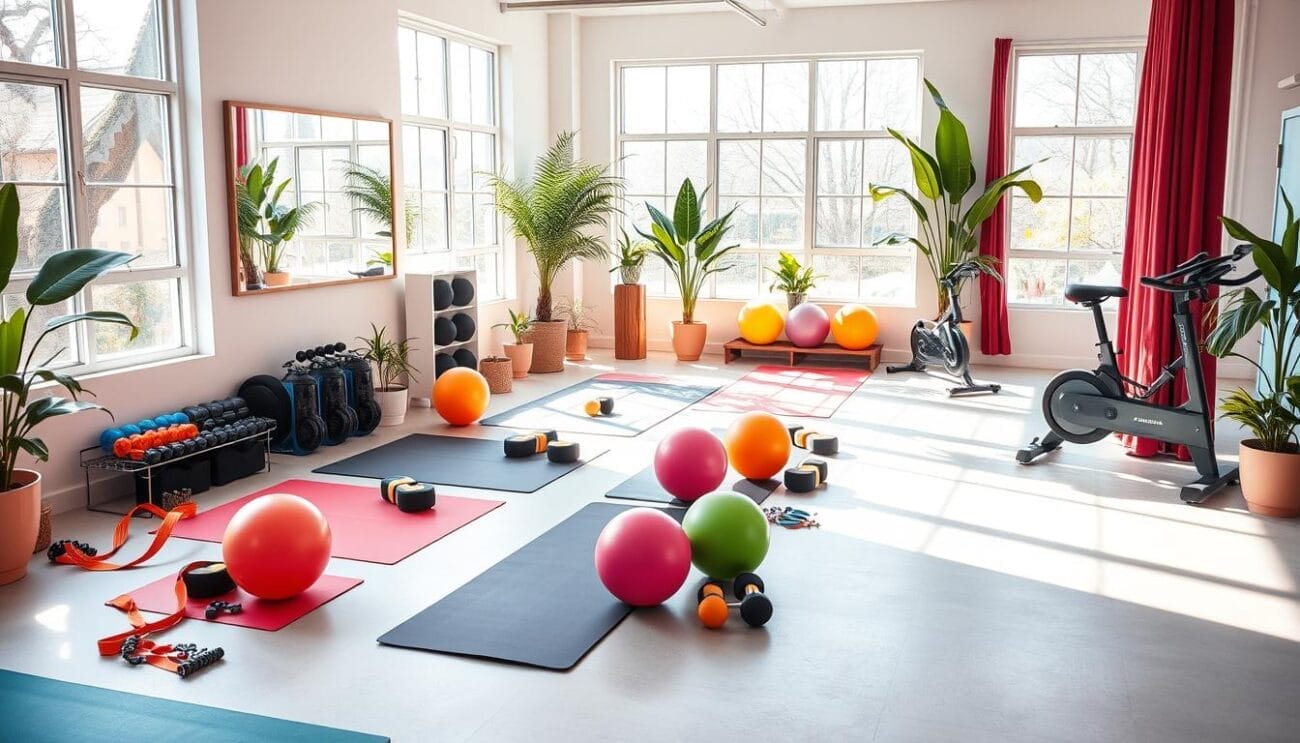
With just a few smart pieces, your space becomes a reliable spot for movement and recovery. Choose tools that add comfort and help you move safely so workouts feel easier to keep doing.
Essentials to start
Start with a supportive mat to protect joints during floor exercises and to steady balance work. Add light to medium weights—dumbbells or an adjustable set—to broaden what you can do in short sessions.
Mini bands and long loops increase resistance for hips and shoulders. Sliders or towels on hard floors create core and hamstring challenges without heavy gear. Keep a sturdy chair nearby for balance and as a bench substitute in strength work.
Recovery and smart storage
For the body, use a foam roller and massage balls to ease tight spots between workouts. Yoga blocks and straps help alignment in stretches and mobility work so you recover faster.
- Organize gear in a basket so setup is quick and low friction for your routines.
- If noise matters, use a thicker mat and pick low-impact variations for neighbor-friendly sessions and better consistency in your classes.
- Upgrade gradually—add one item at a time as you learn what you use most.
“A tidy, targeted setup removes excuses and makes showing up simple.”
For ideas on compact layouts, see a helpful guide to a compact home gym setup that fits small spaces.
Wellness essentials from Fit n Fab Shop to support your workouts
A few targeted products can help you move better today and protect performance for the long run. Prioritize simple, evidence-backed picks that fit your routine and your budget.

Top Amazon supplements for performance and recovery
Support performance with staples like electrolytes, omega-3s, and creatine or protein to help you recover day after day.
- Electrolytes for hydration and steady energy.
- Omega‑3 for joint health and inflammation control.
- Creatine or protein to rebuild muscle after hard sessions.
Herbal remedies to soothe stress and support holistic balance
Choose calming herbs to help your nervous system downshift on rest days and after evening classes.
- Ashwagandha for stress resilience and gentle recovery.
- Lemon balm for calmer evenings and better sleep routines.
- Tart cherry or magnesium to ease muscle tension and help flexibility.
Self‑care picks: sleep aids, bath soaks, and muscle relief for rest days
Make recovery a ritual with bath soaks, arnica creams, and muscle balms to refresh tired legs and soothe soreness.
- Arnica-based creams for surface pain relief.
- Bath soaks with Epsom salt to ease tightness.
- Travel-friendly packets and softgels to keep access to your essentials when schedules change.
Keep it simple: set up repeat deliveries for items you use every week, pick clean-label options, and pair supplements with solid habits like protein at meals and plenty of water.
“Prioritize your wellness: small, consistent supports amplify what you do in each session.”
Ready to shop? Visit Fit n Fab Shop for curated picks that make recovery, sleep, and stress relief easier to maintain and help you feel your best every day.
online group fitness classes: how to choose the best platform for you
Picking a platform starts with what you need: types of sessions, time you can spare, and whether you want live coaching or replay videos.
List must-haves first—yoga, pilates, strength, ideal workout length, and your preference for live energy versus on‑demand viewing. This helps narrow choices fast.
Compare membership features: trial length, replay access, instructor variety, and cancellation terms. Pick one that lets you test without pressure so you can quit if it doesn’t fit.
Always view sample sessions before you sign. Watch coaching cues, camera angles, music, and how instructors correct form. A fitness class you enjoy is one you’ll repeat.
Check search filters for low‑impact, small‑space, or equipment‑free options. Scan the weekly schedule to match work and family rhythms and favor platforms that add new content often.
If technique matters, prioritize libraries with tutorials and form breakdowns. Look for yoga and pilates categories that scale from foundations to advanced flows so your progress is clear.
Finally, test playback on your devices. Smooth apps with bookmarking save time and remove friction. Choose the best online platform that excites you—consistency beats perfection for long‑term results.
Make your schedule work for you: set your weekly rotation
Small, consistent plans beat perfect intentions—design a week that you can actually keep.
Sample split: strength, cardio, mobility, and active recovery
Try this simple rotation to stay steady without overthinking your routine.
- Day 1: strength training — full body with weights.
- Day 2: cardio — dance or intervals.
- Day 3: yoga or pilates for breath and alignment.
- Day 4: strength (focused lifts). Day 5: mobility + core on a mat.
- Day 6: cardio. Day 7: active recovery — walks, breath work, gentle stretching.
For tight schedules, stack a 20-minute strength block with a 10-minute finisher so your workouts fit the time you have.
Track what you did and how you felt. Patterns help you tune training to the person you are today.
| Focus | Typical time | Equipment |
|---|---|---|
| Strength | 20–40 min | Weights, mat |
| Cardio | 20–45 min | Bodyweight, light gear |
| Mobility / Recovery | 10–30 min | Mat, bands |
Progress weekly: add reps, resistance, or time under tension and plan a lighter deload every 4–6 weeks.
Music matters: choose classes with playlists that keep you moving
A smart soundtrack can turn a tough set into something you actually look forward to.
Pick dance-forward playlists when you want energy. They make hard intervals feel like a party and help you sweat without counting every rep.
Music-driven cues guide pacing and form. When movement matches the beat, you’ll feel like you’re flowing instead of forcing reps. Test pop, house, or hip-hop to see what boosts your momentum.
- Lower instructor music if you prefer your own tracks and layer in favorites.
- Time warm-ups to slower tempos and save big songs for mid-workouts.
- Choose calm, ambient mixes for yoga or mobility so breath and focus stay central.
- Keep one “get moving” song for days you need a quick push to start.
“The right playlist can make time fly and turn effort into momentum.”
Form, safety, and modifications so you feel great—inside and out
Good form protects you from setbacks and helps every session feel productive. Start with simple patterns and build confidence before adding load or speed.
Smart progressions: range of motion first, then add weights and intensity
Begin with bodyweight to learn the movement and joint alignment. Only add weight when you control the full motion with steady tempo.
Use tempo training—slow lowers and brief pauses—to increase strength without jumping to heavier loads. This protects tendons and helps you target the right muscles.
Warm up with dynamic drills and activate stabilizers. Cool down with gentle stretches to keep flexibility and aid recovery.
Joint‑friendly options: low‑impact swaps for jumps and deep bends
Protect knees and hips by landing softly and keeping shins vertical in squats and lunges. Swap jumps for step-outs when impact bothers you.
Replace deep spinal bends with hip hinges or supported variations to meet your flexibility goals without strain. For sensitive wrists, elevate hands on dumbbells or a bench for planks and pushups, or choose pilates-style core work.
- Master patterns bodyweight first, then add load.
- Pause videos during fast sessions to check positions.
- Balance training across major muscle groups: push, pull, hinge, squat, rotation.
- If pain spikes, regress the move or cut range; progress when you feel stronger and move better.
“Let great form be your guide—progress follows control.”
Budget and memberships: free apps, trials, and value‑packed subscriptions
Sizing up free trials helps you avoid wasted subscriptions and pick a program you’ll use for years.
Start by testing the best online options. Nike Training Club is free to begin, The Sculpt Society and The Class offer 14‑day trials, and LEKFIT has a 7‑day trial. Try each trial during a normal week so you can view how replay access and instructor variety feel in real life.
Compare membership perks. Look for platforms that include program libraries, fresh videos weekly, and clear cancellation or pause policies. These features save money across the years and reduce surprise charges.
If you’re building a home gym on a budget, favor platforms that require minimal weights and emphasize bodyweight strength training and cardio. Stack one paid subscription for structure and a free app for quick add‑ons like core or mobility work.
Use referral credits, bundle discounts, or family plans to lower costs when you train with friends. Consider annual plans only after a month or two of steady use and reassess quarterly as your goals shift.
“Test before you commit — flexibility and fresh content give the best long‑term value.”
| Feature | What to check | Why it matters |
|---|---|---|
| Free trial length | 7–14 days | Gives time to view schedules, try replays, and test formats |
| Replay & library access | Unlimited or tiered | Replay access helps you refine form and repeat favorite videos |
| Equipment needs | Bodyweight to light weights | Lower gear needs cut setup cost and speed habit formation |
| Cancellation / pause policy | Easy online pause/cancel | Flexibility prevents wasted fees over months or years |
| Added value | Technique tutorials, new videos weekly | Keeps workouts fresh and supports safe strength training progress |
Conclusion
Focus on what you enjoy and what you can do regularly. Pick a mix of strength, cardio, yoga, and pilates that fits your week and keeps your workouts varied and fun.
Start with one platform and two favorite formats, then tweak as you learn what helps you sweat and smile. It seems like you need more time, but 20–40 focused minutes, done consistently, beats sporadic long sessions.
Support recovery with sleep, hydration, and carefully chosen essentials from Fit n Fab Shop. Explore supplements and herbal picks and a practical comparison of virtual versus in‑person options at online vs in‑person guide.
You’re ready: press play, enjoy the process, and celebrate the people who show up with you—over months and years, small steps add up to big change.
FAQ
What equipment do I really need to get started at home?
You only need a few basics to begin: a comfortable mat, a pair of light to medium dumbbells or resistance bands, and a sturdy chair. These items let you do strength, balance, and mobility work comfortably. Add sliders or a foam roller as you progress for recovery and extra versatility.
How do I pick between live sessions and on‑demand videos?
Live sessions give real‑time motivation and accountability, which helps you stick to a routine. On‑demand offers flexibility so you can train when it fits your day. Try a mix: book a few live classes each week for community energy and use archived workouts for travel or busy days.
How often should I strength train versus doing cardio?
Aim for two to three strength sessions and two to three cardio or mixed‑modality workouts per week. That balance helps you build muscle, support bone health, and maintain heart health. Include at least one mobility or restorative day to reduce soreness and preserve range of motion.
Can I get a full‑body workout in 20–30 minutes?
Yes. Programs like 28‑minute HIIT blocks or circuit formats combine compound moves to hit every major muscle group quickly. Focus on intensity and good form, and pick routines that alternate strength and cardio for maximum efficiency.
How do I modify exercises if I have joint pain or mobility limits?
Prioritize range of motion and reduce impact. Swap jumps for step touches, choose seated variations, and lower depth on squats or lunges. Use bands for resistance instead of heavy weights. Instructors who cue joint‑friendly options and progressions make modifications easy to follow.
What should my weekly schedule look like if I want balanced results?
Try a simple rotation: strength, cardio, mobility, strength, mixed cardio/strength, active recovery, rest. That gives you two strength sessions, two higher‑intensity days, a mobility focus, and a recovery day each week. Adjust based on how your body feels.
Are there programs designed for older adults or people focused on balance?
Yes. Many platforms offer stability and fall‑prevention sessions, chair‑based strength, and low‑impact cardio designed for active aging. Look for classes labeled “stability,” “balance,” or “senior” with clear progressions and safety cues.
How do I know which platform or program is worth paying for?
Check for trial periods, clear class schedules, variety across strength, yoga, and cardio, and well‑trained instructors. Value comes from consistent new content, accessible modifications, and useful features like class bookmarking and progress tracking.
How can I use music to boost my workouts?
Choose playlists that match your workout pace—upbeat for cardio, steady beats for strength, calm for mobility. Many classes include curated playlists; you can also create your own to match intervals and tempo changes to stay motivated.
What recovery tools should I keep on hand to reduce soreness?
Keep a foam roller, massage balls, and a few supportive straps or a resistance band. Add sleep aids like a weighted eye mask and calming herbal remedies for rest days. These tools help circulation, ease tight muscles, and speed up recovery.
How do I progress safely with weights and intensity?
Start with range of motion and technique, then increase load or reps gradually. Use smart progressions: add weight once you can complete all sets with good form, and alternate heavier weeks with lighter ones to avoid overtraining.
Can dance or hybrid classes actually build strength?
Yes. Dance‑cardio combined with sculpting blocks or Pilates‑style flows engages core and limb muscles while improving coordination. Look for hybrid classes that include targeted mat work or resistance segments to build lean strength.
Is it possible to train effectively in a small space?
Absolutely. Many programs and collections are tailored for small areas, using bodyweight, bands, and light dumbbells. Prioritize moves that don’t require lateral travel and use vertical strength patterns like squats, presses, and rows.