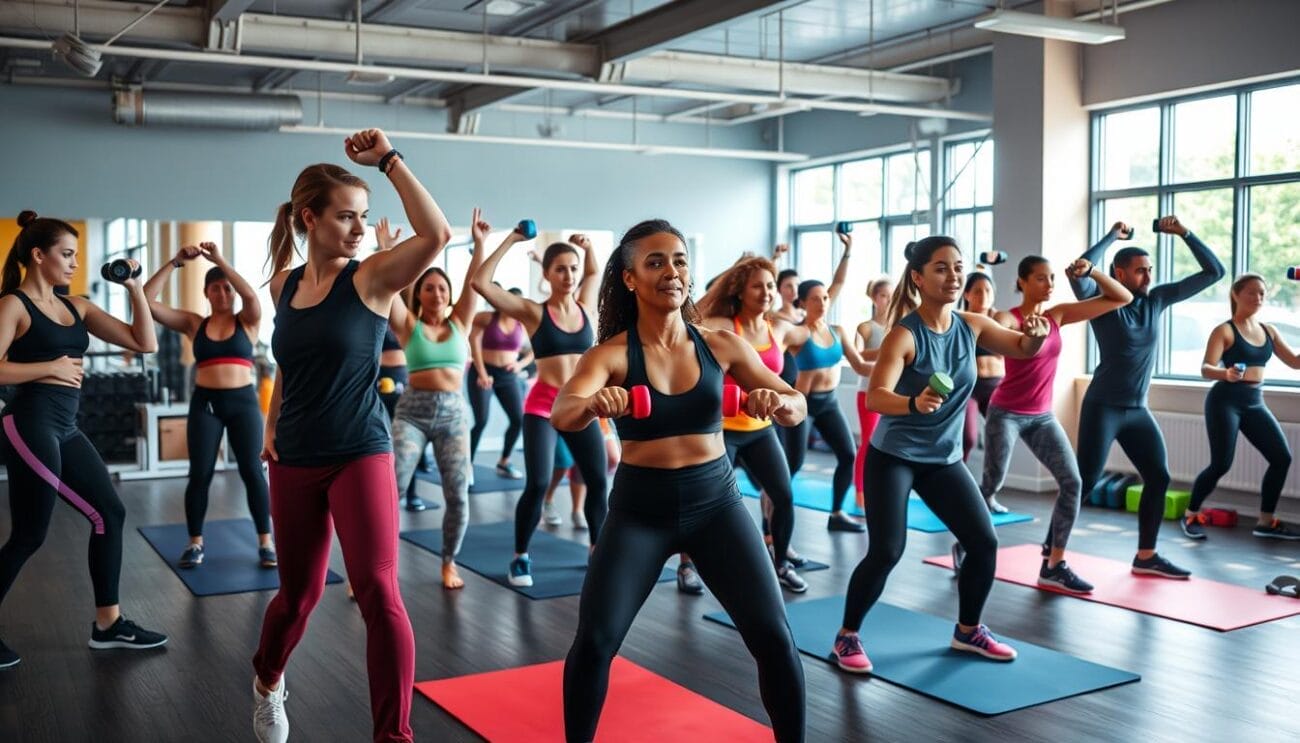
Did you know that classes led by a trained instructor can boost long-term attendance by over 30%? That edge matters when your goals need more than willpower.
You get clear instruction, real-time coaching, and a safe environment designed to help you achieve fitness goals. Instructors plan workouts that mix cardio, strength, and flexibility while offering simple modifications for participants at every level.
This experience builds momentum. Expect upbeat pacing, timed music, and straightforward communication so you always know what’s next. Combine that with Fit n Fab Shop’s curated supplements and self-care picks to support recovery and daily wellness.
Start your journey today with a class culture that invites consistency, celebrates wins, and keeps safety front and center. Show up, follow cues, and watch progress mount as you move toward success.
Key Takeaways
- Trained instructors improve attendance and help you stay on track.
- Classes blend cardio, strength, and flexibility with safe modifications.
- Clear communication and pacing make workouts easier to follow.
- Community support boosts accountability and celebrates success.
- Pair classes with Fit n Fab Shop picks to enhance recovery and wellness.
How to Kickstart a Successful Group Fitness Journey with Leadership at the Core
Start your class with clear rules and a warm welcome to set the tone for success. When you state safety, flow, and cueing signals up front, clients and participants know what to expect. This creates calm, reduces confusion, and prevents common situations that can derail focus.
Create positive norms by modeling respect and inclusion. Invite quick introductions, pair people for partner drills, and celebrate small wins. These small steps build a strong sense of trust and keep motivation high.

Use short stories to inspire and teach technique. Share a quick client win or a personal moment to make cues memorable. Storytelling helps participants link exercises to real-life benefits so form and posture stick.
Match music tempo and pacing to each workout block—warm-up, intervals, strength, and cool-down. Clear timing keeps energy steady and helps participants follow transitions without guesswork. Scan the class and offer early modifications like lighter loads or range-of-motion options to meet varied needs.
- Set clear expectations: safety rules, flow, and cue signals.
- Build community with introductions, partner work, and shout-outs.
- Use storytelling to inspire, teach, and celebrate progress.
- Align music, timing, and pacing to class goals and client energy.
- Offer smart modifications for injuries, abilities, and comfort.
| Focus Area | Action | Benefit |
|---|---|---|
| Expectations | State rules and flow at start | Safety and clarity for all participants |
| Community | Partner drills and shout-outs | Higher engagement and retention |
| Storytelling | Share short, relatable examples | Better technique recall and motivation |
| Music & Pacing | Sync tempo to intervals | Smoother class flow and energy control |
| Modifications | Offer alternatives early | Inclusive progress and injury prevention |
Prioritize your wellness with curated essentials from Fit n Fab Shop. Browse targeted supplements and self-care picks to support recovery and daily health, or explore career options for a rewarding path as a group fitness instructor role. For self-care tools and natural supports, see Fit n Fab Shop’s wellness picks.
Skilled Group Fitness Leaders: The Practical Skills You Need Right Now
Practical skills make the difference between a good session and one that truly helps clients reach goals. You need clear coaching, a solid safety baseline, and the emotional tools to handle tense moments. These basics create calm, trust, and steady progress for participants.
Communication skills that motivate, clarify, and connect

Your voice matters. Use crisp cueing and layered coaching: show setup, action, then correction. That keeps clients confident and reduces form errors.
Empathy and understanding to tailor classes
Assess needs quickly and scale intensity. When you adjust pace or equipment, participants feel challenged but safe. Empathy builds loyalty and long-term success.
Managing challenging situations with calm
For conflicts, equipment issues, or form breakdowns, stay composed and use emotional intelligence. A steady response protects participants and preserves class flow.
Exercise science basics
Focus on neutral spine, joint alignment, breathing, and progressive overload. These principles lower injury risk and make workouts effective.
Professional development and teaching across settings
Maintain certification and CPR/first aid. Adapt your teaching style for gyms, studios, online streams, or outdoor classes without sacrificing safety.

| Skill Area | What You Do | Client Benefit |
|---|---|---|
| Communication | Cue setup, action, correction | Clear movement, fewer form errors |
| Empathy | Scale intensity and offer options | Inclusive progress and higher retention |
| Safety | Monitor alignment and breathing | Reduced injury risk, better results |
| Professional Growth | Certifications and continuing education | Credibility and updated knowledge |
- Document experience: track what worked and what clients praise.
- Keep goals visible: remind clients how each class links to larger milestones.
- Prioritize your wellness: support recovery with curated picks from Fit n Fab Shop and select Amazon supplements for balanced health.
Put It Into Action: Step-by-Step Class Leadership Plus Supportive Wellness Essentials

When you map objectives and tempo, your class runs with purpose and flow.
Pre-class planning: objectives, assessments, and clear cues
Plan with purpose. Set one or two clear objectives and scan your roster for needs. Use brief assessments to note health considerations and goals.
In-class delivery: demo correct technique and give real-time feedback
Demo, cue, correct. Show each exercise, name the setup and action, then offer the most common correction. Give timely feedback so clients self-correct fast.
Post-class follow-up: track progress and invite constructive feedback
Track attendance and note progress. Ask for feedback, message next steps, and adjust future plans to help clients achieve fitness goals.
Support your fitness goals with curated Amazon supplements and self-care
Prioritize recovery and daily wellness. Point participants to curated wellness essentials and top Amazon supplements that align with their goals.
Explore Fit n Fab Shop’s curated wellness essentials for thoughtful product picks: curated wellness essentials.
- Outline warm-up, main set, finisher, and cool-down matched to tempo.
- Offer regressions and progressions so every participant joins safely.
- Stay prepared with CPR/first aid and an emergency plan for challenging situations.
| Step | Action | Benefit |
|---|---|---|
| Pre-class | Objectives, roster scan, brief assessments | Clear expectations and safe environment |
| During class | Demo movements, cue form, give feedback | Better technique, fewer injuries |
| Post-class | Track progress, request feedback, message next steps | Ongoing motivation and steady success |
Conclusion
Finish strong: turn what you learned into simple actions that shape every future class.
You now have clear ways to set expectations, cue form, and adapt exercises so participants feel safe and seen. Carry forward these practical skills and the calm leadership that helps clients progress.
When challenging situations arise, rely on calm communication and a few de-escalation techniques to preserve flow and trust. Honor your role as a fitness instructor and keep learning to deepen your experience.
Prioritize recovery and wellness with curated picks from Fit n Fab Shop, and review focused leadership strategies for group fitness instructors to refine your teaching and support client success today.
FAQ
What can I expect from a class led by experienced group fitness leaders?
You’ll join a welcoming environment where clear expectations, safe progressions, and motivating instruction guide every session. Leaders design classes with pacing, music, and exercises that match the class goals while offering modifications so you can train confidently at your level.
How do leaders keep classes safe and effective for different ability levels?
Instructors use exercise science basics—proper form, controlled progressions, and injury-prevention cues—to protect participants. They offer smart modifications and alternatives so you can scale intensity, maintain good technique, and still feel challenged without risk.
How will a strong leader help me stay motivated and reach my goals?
A good instructor blends storytelling, clear communication, and empathy to connect with you. They celebrate milestones, tailor feedback to your needs, and foster camaraderie so you feel supported. That social connection plus targeted coaching helps you stick with your plan and move toward measurable results.
What practical skills should I look for when choosing an instructor?
Seek clear verbal cues, confident demonstrations, and helpful real-time feedback. Leaders should hold relevant certifications, CPR/first aid training, and stay current with professional development. Look for someone who adapts classes for different settings—studio, outdoor, or online—and reads the room well.
How do instructors handle challenging situations during class?
They respond calmly with emotional intelligence—assessing needs, offering adjustments, and de-escalating when needed. Whether it’s fatigue, injury concern, or equipment issues, a prepared leader keeps safety first while maintaining a positive atmosphere.
What should a smart pre-class plan include?
Pre-class planning typically covers clear objectives, participant assessments, warm-up progressions, and cue strategy. That preparation ensures your session flows smoothly, targets the right systems (strength, cardio, mobility), and minimizes downtime.
How do instructors deliver feedback during class without disrupting flow?
They use concise, actionable cues paired with brief demonstrations and spot corrections. Feedback focuses on alignment and breathing, and leaders balance group instruction with targeted one-on-one checks during transitions.
What happens after class to support my progress?
Effective leaders track progress, invite constructive feedback, and offer follow-up tips or homework—mobility routines, recovery strategies, or goal-checks. That post-class touchpoint helps you keep momentum between sessions.
Are there ways to enhance my training outside of classes?
Yes. Complement sessions with proper nutrition, hydration, sleep, and targeted supplements you research on trusted retailers like Amazon. Recovery practices—foam rolling, stretching, and rest days—also boost results and reduce injury risk.
Can I expect personalized attention in larger classes?
Even in bigger sessions, quality instructors create micro-moments of personalization—grouped progressions, offered regressions, and periodic check-ins. They design classes so you can pick the appropriate level and still feel seen and supported.